Intensive Outpatient Programs (IOP) in Pennsylvania
for Mental Health and Addiction
An intensive outpatient program provides structured mental health and addiction treatment while allowing individuals to maintain their daily responsibilities. These programs offer comprehensive care through individual counseling, group therapy, and family involvement. As a provider of mental health and addiction treatment, ETHOS Treatment delivers evidence-based programs for adolescents and adults across Pennsylvania.
Schedule
Sessions
Treatment frequency typically ranges from three to four sessions per week. This schedule provides consistent support while accommodating work, school, and family obligations. The structured approach helps individuals develop healthy routines and coping strategies.
These programs serve as an effective bridge between inpatient care and independent recovery.
What Does an
Intensive Outpatient Program Include?
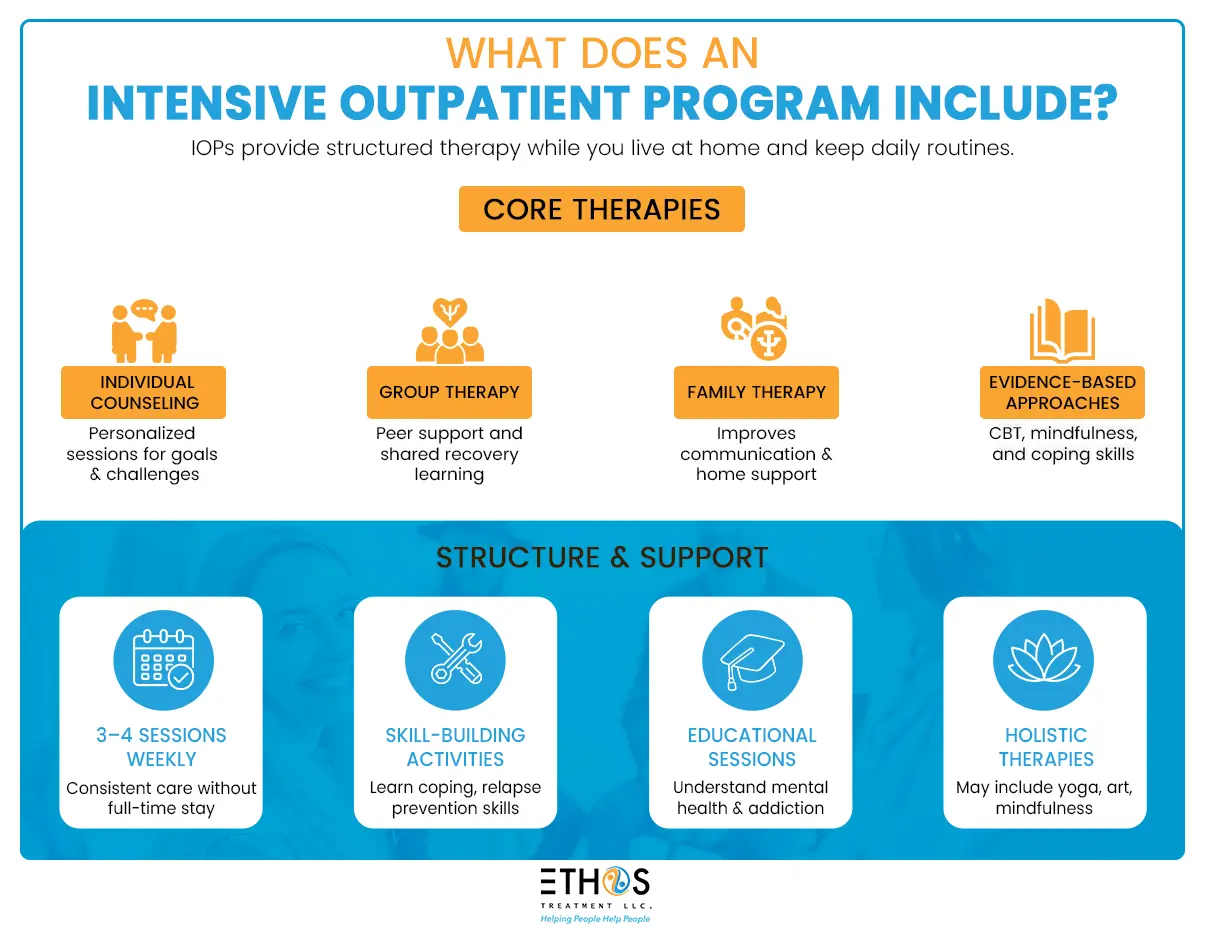
Intensive outpatient programs typically include individual counseling, small group therapy, and family therapy. These three components work together to address different aspects of recovery and mental health treatment.
Individual counseling provides personalized attention for specific challenges and goals. Group therapy creates peer support and shared learning experiences. Family therapy helps repair relationships and build a supportive home environment.
Why is the program
intensive?
An outpatient program is considered intensive because treatment occurs three to four times per week. This frequency provides timely assistance for overcoming obstacles and establishes a routine built on structure, stability, and accountability.
Mental health and substance use issues affect daily life continuously. Regular treatment sessions interrupt destructive patterns and replace them with healthy habits. The goal involves breaking cycles that perpetuate mental health or addiction challenges.
Why
outpatient?
Clients in outpatient programs often have obligations to school or work and relationships to repair or sustain. Outpatient treatment allows individuals to meet daily life demands while applying newly learned skills in real-world settings.
This approach enables the practice of coping strategies in actual situations where challenges occur. Clients can immediately implement therapeutic techniques in their home, work, or school environments.
Why a
small group?
Small groups include people in similar age brackets who face comparable issues. Group members connect on multiple levels and build supportive communities.
This structure breaks down isolation and creates mutual support systems. Participants learn from others’ experiences and develop interpersonal skills in a safe environment.
Why involve
family?
Most clients participate in weekly family therapy sessions. Clinicians engage family members in the healing process and support relationship repair.
ETHOS also offers family therapy to individuals who do not have a family member already receiving care. Family involvement strengthens recovery outcomes and addresses systemic issues.
What Evidence-Based Therapies Are
Used in Treatment?
ETHOS intensive outpatient programs incorporate proven therapeutic approaches that form the foundation of effective addiction and mental health treatment.
Cognitive Behavioral Therapy (CBT) helps clients identify and change unhelpful thought patterns and behaviors. Licensed Clinicians use CBT techniques to develop practical coping skills and challenge negative thinking patterns that may trigger substance use or worsen mental health symptoms.
Motivational Interviewing strengthens motivation and commitment to change through collaborative counseling techniques. Rather than confrontational approaches, motivational interviewing helps individuals explore their own reasons for recovery and resolve treatment ambivalence. This approach proves especially effective in early recovery stages when motivation may fluctuate.
How Are Dual Diagnosis and Anxiety Disorders
Treated?
Many clients entering intensive outpatient programs struggle with co-occurring disorders. These involve the simultaneous presence of addiction and mental health conditions. ETHOS specializes in integrated dual diagnosis treatment that addresses both conditions simultaneously.
Anxiety management approaches combine therapeutic techniques with practical coping strategies. Clients learn evidence-based methods for managing anxiety symptoms, including breathing exercises, progressive muscle relaxation, and cognitive restructuring. Treatment also addresses how anxiety may contribute to substance use and develops personalized strategies for managing anxiety without relying on drugs or alcohol.
For clients with borderline personality disorder symptoms or other complex mental health conditions, specialized treatment tracks integrate intensive therapy with peer support and family involvement.
How Are Detox and Withdrawal Symptoms Managed?
While ETHOS focuses on outpatient treatment, many clients need support navigating detox and withdrawal symptoms. Clinical teams coordinate closely with medical detox facilities when needed and provide comprehensive support for clients transitioning from detox to intensive outpatient programs.
Alcohol withdrawal symptoms can be particularly challenging and potentially dangerous. Clinicians receive training to recognize withdrawal symptoms and ensure clients receive appropriate medical supervision when needed. Education about withdrawal expectations and ongoing support occurs throughout the process.
Withdrawal symptoms vary depending on the substance and individual factors. Common symptoms include anxiety, depression, sleep disturbances, and physical discomfort. Intensive outpatient programs provide structure and support during this vulnerable time, helping clients develop healthy coping mechanisms as bodies and minds heal.
Substance-specific education and support help clients understand how different substances affect the brain and body. Personalized relapse prevention strategies are developed based on specific substance use patterns.
What Recovery Support and
Aftercare Is Available?
Recovery extends far beyond formal treatment completion. ETHOS integrates 12-step principles into programming while respecting diverse spiritual and philosophical approaches to recovery.
The 12 steps of AA provide a time-tested framework for personal growth and sustained recovery. While not mandatory, many clients find value in exploring these principles as part of their healing journey. Clients learn how 12-step concepts can complement evidence-based therapy.
Intervention services support families struggling to help loved ones recognize treatment needs. Experienced clinicians guide families through the intervention process with compassion and Clinical expertise, increasing the likelihood of a positive outcome.
Aftercare planning begins from day one of treatment. Clients develop comprehensive discharge plans that may include ongoing therapy, support group participation, sober living arrangements, or transition to a halfway house when appropriate. The goal ensures every client has a clear path forward and ongoing support systems in place.
How Does Holistic Behavioral Health Support Recovery?
Behavioral health approaches extend beyond addressing symptoms to promoting overall wellness and life satisfaction. Sustainable recovery requires attention to all aspects of well-being.
Mindfulness practices weave throughout programming, helping clients develop present-moment awareness and emotional regulation skills. These techniques, including meditation and mindful breathing, provide practical tools for managing stress and reducing relapse risk.
Treatment also addresses codependency patterns that often develop in families affected by addiction or mental health issues. Through individual and family therapy, clients and loved ones develop healthier relationship patterns and boundaries.
Holistic approaches include attention to physical health, sleep hygiene, nutrition, and lifestyle factors that support recovery. True healing involves the whole person, not just symptom elimination
If individuals or families are seeking support for mental health or substance use challenges, help is available. An intensive outpatient program provides the structure and care needed for sustainable recovery. ETHOS Treatment remains committed to supporting adults and providing adolescent mental health treatment on the journey toward healing and long-term wellness. Contact us today to learn more about our programs.
Frequently Asked Questions
(FAQ)
An intensive outpatient program is a structured treatment approach that provides therapy and support for mental health and substance use disorders without requiring overnight stays.
Cognitive behavioral therapy in an intensive outpatient program helps individuals identify and change unhelpful thought patterns and behaviors related to addiction or mental health challenges.
Mindfulness practices in intensive outpatient programs involve techniques like meditation and breathing exercises to help individual manage stress and improve emotional regulation.
Anxiety management in an intensive outpatient program includes therapy, coping skills training, and support groups to help individuals reduce symptoms and improve daily functioning.
Dialectical behavior therapy in an intensive outpatient program teaches skills for emotional regulation, distress tolerance, and interpersonal effectiveness.
Withdrawal symptoms are managed in an intensive outpatient program through medical monitoring, counseling, and support to ensure safety and comfort during recovery.
Motivational interviewing is a counseling technique used in intensive outpatient programs to strengthen a person’s motivation and commitment to change.
An intensive outpatient program supports sustainable recovery by combining individual therapy, group sessions, and family involvement to build coping skills and resilience.
Many intensive outpatient programs offer integration with 12-step programs, providing additional peer support and recovery resources.
An intensive outpatient program addresses co-occurring disorders by providing integrated care for both mental health and substance use challenges.

MD, Alex Moxam is a graduate of Sidney Kimmel Medical College and completed his adult psychiatry residency at the University of Pennsylvania. Subsequently, he pursued a fellowship in child and adolescent psychiatry at the Children’s Hospital of Pennsylvania.
Using a holistic approach and emphasizing shared decision-making, Dr. Moxam engages with clients to initiate and optimize medication regimens. His goal is to decrease problematic symptoms and enhance the overall quality of life for those under his care. Dr. Moxam’s expertise spans both adult and child psychiatry, reflecting his commitment to providing personalized and effective care.